

Hello there,
Happy UNGA and Meta Connect week.
The frenzy around the People’s IPO continues. Moniepoint has extended subscriptions to its POS terminals, Bamboo is offering access to non-Nigerians, and banks are rewriting the old payday loan so customers can borrow to buy in. Remember when we wrote about premium Nigerian banking?
Catch up on the earlier editions of our Stablecoin September series here and here, and ask your Muse or Instinct to subscribe, read and share what we write with your loved ones.
Headlines
🇺🇸 The US SEC approved a five-year “innovation exemption” allowing limited trading of tokenised stocks on on-chain venues.
🇬🇧 The London Stock Exchange Group partnered with Payward to bring the 100 largest London-listed companies on-chain as xStocks.
🇪🇺 The ECB launched Pontes, which lets banks settle tokenised wholesale markets in central bank money.
🇳🇬 The Dangote Refinery IPO is having an on-chain moment.
🇪🇺 Raiffeisen Bank International, with $235 billion in assets, will launch crypto trading across 11 European markets.
₿ Binance invests $100 million in USDC issuer Circle
🇺🇸 NYSE signed a deal with Blockchain.com to bring tokenised US stocks to 44 million crypto accounts.
🇺🇸 🇳🇬 Caroline Ellison, former CEO of Alameda Research, has joined the effective altruism charity Manifund to build its funding platform and research how to direct philanthropic Dollars. Also, the NASD OTC Securities Exchange in Nigeria appointed Arese Ugwu as acting CEO.
🎧 More IPO content? Listen to part 2 of the Africa Built episode, on Interswitch.
This week we lead with four stories from four jurisdictions, all leaning towards enabling access and trading of tokenized equities.
Today, Robinhood, Ondo, Luno, Daya Stocks, Accrue and NectarFi all sell something called a tokenized stock, which allows the stablecoin maxi in Lagos to fund an app locally and buy a slice of $AAPL.
The question before these rulings went live was always the same. If you buy Apple on-chain, do you own Apple?
What is a stock token?
Depending on who is answering, a stock token is built one of three ways. The SEC’s view is that a tokenized security is still a security, whatever database it lives in.
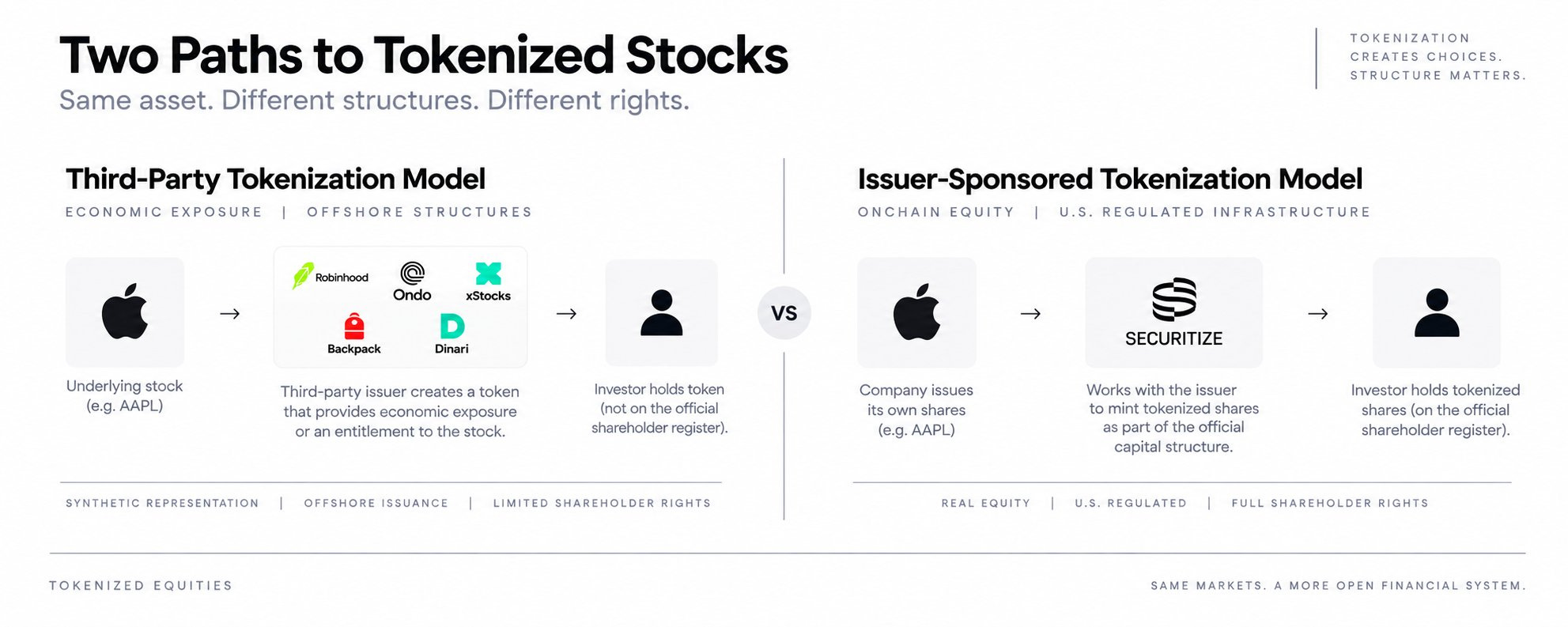
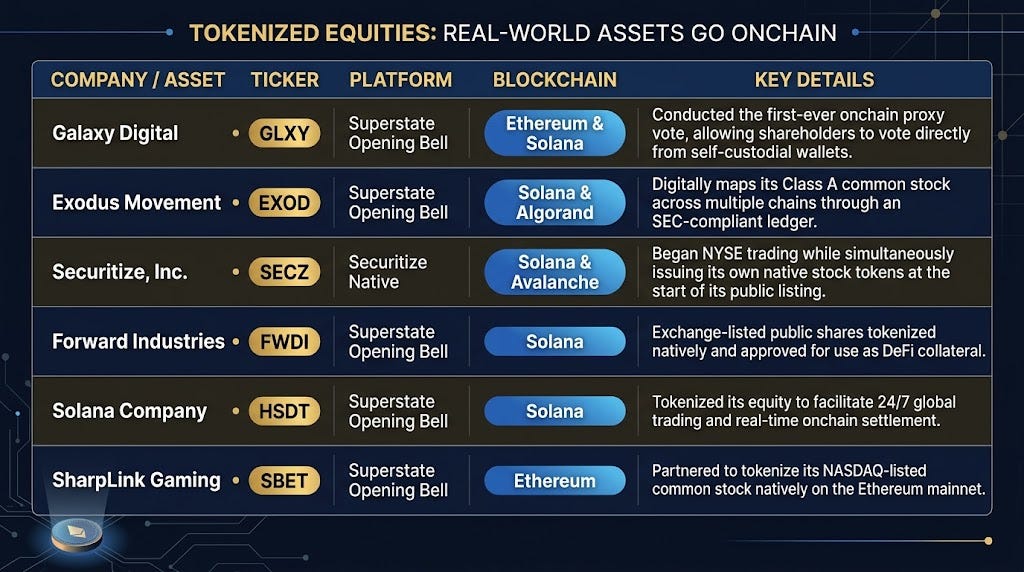
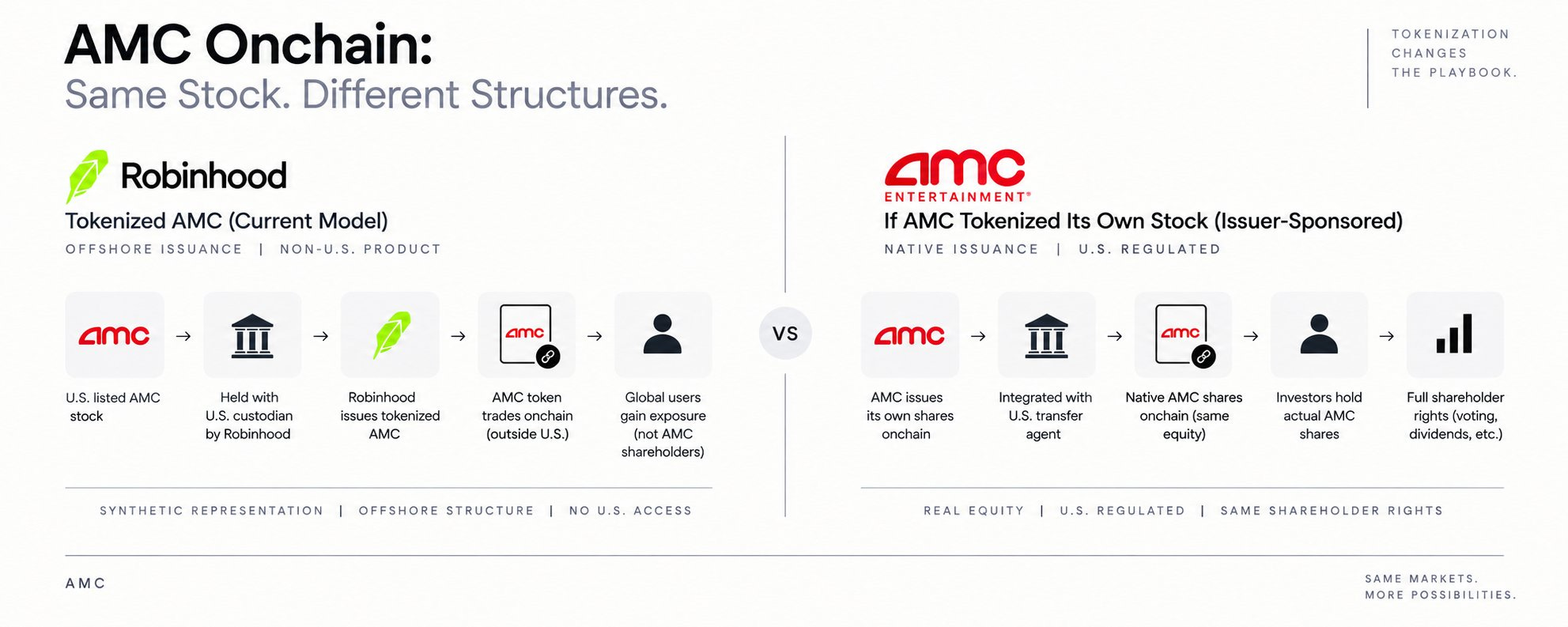
1. Issuer-sponsored tokenised shares. This is the cleanest design, because the issuing company, or its official agent, puts its own share register on-chain. A transfer of the token changes the company’s official record of who owns the security, so the stock stays a stock and the blockchain becomes the database. An issuer may also keep the master register off-chain and use token transfers to trigger updates to it. Today, select issuer-sponsored tokens are live via Securitize and Superstate’s Opening Bell platforms
2. Third-party custodial tokens. This is the model most retail users will interact with, as it involves a third party buying a share, holding it through a broker or custodian, then issuing a token linked to that pool of assets. You get the price action and the access, while your legal claim runs through an issuer, a special-purpose vehicle, a security agent and a custodian. Ondo’s tokens are structured notes from a British Virgin Islands vehicle with no voting or information rights. Luno’s Nigerian disclosure says its tokenised stocks confer no legal ownership of the underlying shares or ETFs. Daya reinvests dividends into the same position.
3. Synthetic exposure. Here nobody buys a share. Instead, they buy a perpetual future (a perp, a contract that tracks a price and never expires), a swap or a linked note. Hyperliquid’s HIP-3 framework lets anyone who stakes enough list a perp on a listed company.
Perps offer leverage, shorting, and round-the-clock trading, along with funding payments, a periodic fee between buyers and sellers, and a liquidation price; Nvidia can rise over the month while your Nvidia perp is liquidated overnight. Both trades get described online as “buying stocks onchain.”
The new US exemption draws its line here, as qualifying stock tokens must keep the same rights as traditional shares, dividends and voting included, and synthetics fall outside the lane. So with a perp, you own a contract that tracks the price of the stock in real time, and the stock itself stays with someone else.
These three designs give you seven questions to ask before you buy any tokenised equity:
Who issued the token? The company, a regulated broker, an offshore special-purpose vehicle, or an anonymous protocol?
What sits underneath it? A real share, a security entitlement, collateral, or only a price formula?
What rights come with it? Dividends, voting, information and redemption, or only a cash value linked to the stock?
Who holds the share? Name the broker, custodian and legal vehicle.
What happens if the issuer fails? Is the asset segregated? Is there a security agent? Can creditors reach it?
Where can you exit? Can you redeem with the issuer, sell only inside one app, or move to another venue? What happens on weekends?
Which regulator and tax system apply? The token issuer, the app and the user may sit in three different countries.
Enter Robinhood
Robinhood (and Coinbase) are among the largest institutional backers of tokenised asset trading, and Robinhood’s model tries to satisfy regulators and customers at once(just don’t let the AMC CEO hear that). Its Stock Tokens are debt securities issued by Robinhood Assets, each backed 1:1 by a share held with a licensed US custodian, and the holder has no legal or beneficial rights against the underlying company.
Dividends arrive as more stock, because Robinhood reinvests the payout into underlying shares and adjusts an on-chain multiplier, so each token represents slightly more of the company over time.
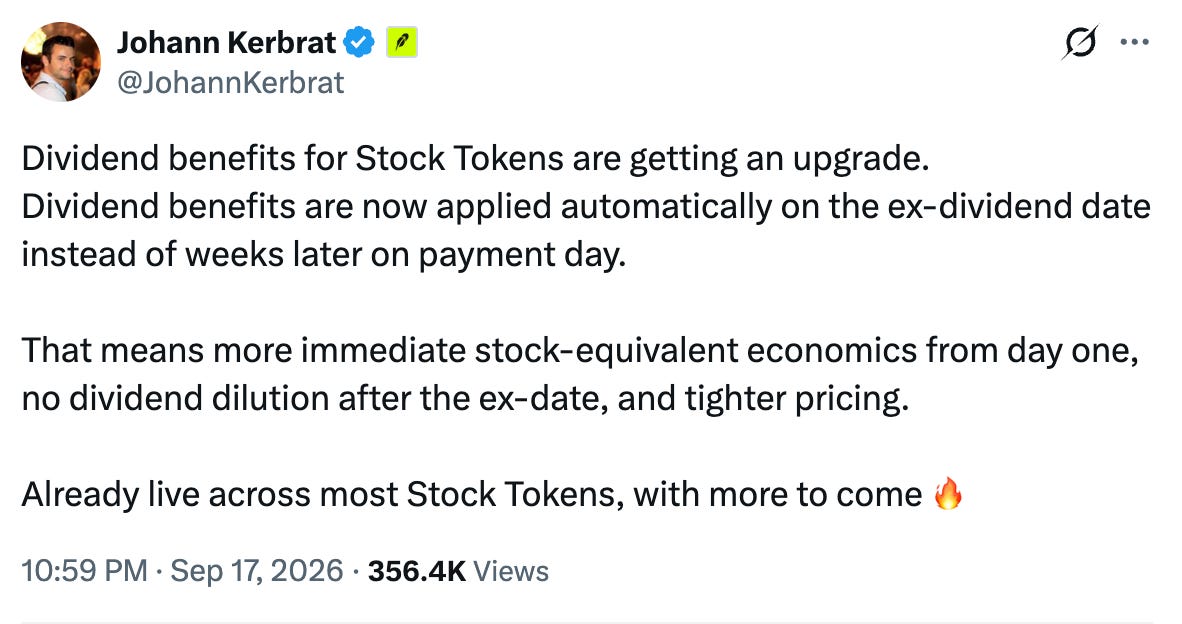
The benefit of this internet-native improvement is to reduce the window between the ex-dividend date and when dividends are paid, offering faster liquidity to investors.
Benefits
Tokenised stocks make sense in three situations:
You lack direct regulatory access to a market because of where you live.
You want a fraction of a share.
You want lower fees and access the third-party risk to be smaller than what you save.
Say a trader has ₦2 million and trades Nvidia. Their broker charges 1% per trade, both ways, and after reading this post(thanks for sharing, dear reader), they decide to go on-chain for fees ranging between 0.05 and 0.25%.
With a gap of about ₦19,000 per trade, trading US Stocks will now costs a fraction of what traditional brokers charged. This presents an opportunity for price-sensitive traders to vote with their feet and migrate to other platforms for the same utility.
Tokens also move during weekends, so a holder can post one as collateral or move it into another application without waiting for several institutions to reconcile their databases. Today, DeFi protocols like Morpho allow users to borrow USDC against Coinbase’s tokenised stocks, turning a stock position into immediate short-term liquidity without a sale being necessary.
How it differs from a traditional share
Beyond database and legal structures, access is the most important benefit and differentiator. I probably don’t qualify to invest on the JSE – in the past, big banks and wealth managers used to build depository receipts so their high-net-worth clients of foreign origins could hold a share they couldn’t buy directly, while charging a fee on every layer of that structure.
Tokenization does the same job cheaper, for the end user and for the back office that reconciles the positions.
A broker-held share sits in a chain of records, running from the broker’s books to a central depository such as CSCS in Lagos to the transfer agent that keeps the shareholder register. An issuer-sponsored token collapses that chain into one ledger, whereas a custodial token adds links to it, and a token settles in seconds on a Sunday.
⚠️Caveat: 24/7 trading does not mean 24/7 liquidity. While a token can trade when its underlying market is closed, it creates a new problem of ensuring the weekend price of the token is tied to the actual share price. This can lead to famed constrained arbitrage scenarios of the Alameda Research variety. I expect this to be solved in the coming years, as Ondo already pauses some assets during corporate actions and news events.
Where to buy
While Robinhood and Coinbase lead the charge, traditional stablecoin and crypto apps are the best place to get tokenized stocks depending on the jurisdiction you reside in and the pool of stocks they have access to.
Looking under the hood of some of the platforms I have access to, Luno sells xStocks-backed US shares in South Africa and Nigeria, and Blockchain.com sells Ondo’s stocks to Nigerian users through its wallet.
Accrue, Daya Stocks, and NectarFi allow users to fund in Naira, and among the global exchanges, Kraken and Bybit list xStocks while Binance has its own bStocks. If leverage is what you seek, Bybit also lets you go long/short US stocks through contracts priced off the share.
Eligible non-US investors can buy from Ondo directly or hold Ondo tokens in MetaMask, and US residents, shut out of most of these, have Dinari.
A stablecoin app already has the KYC, the local rails, the Dollar balance and a customer who understands wallets, so it only needs a tokenised-stock partner to become a broker. For the user, the pitch runs like this:
Start with a small local-currency amount.
Reach US shares without a US bank account.
Trade beyond the normal market session.
Move the asset on-chain or use it in other applications, where permitted.
Exit back through the same local rails.
Dangote on-Chain ($DPRI)
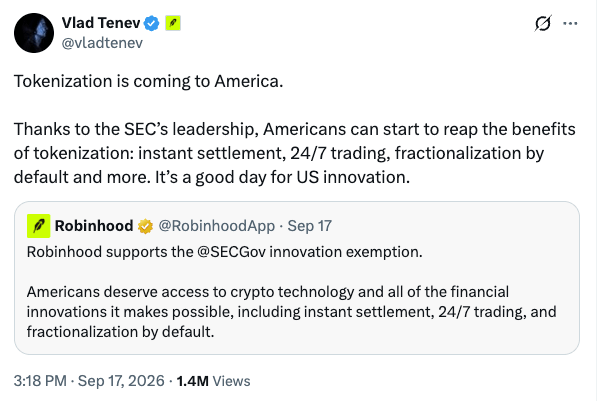
Yet again, the tokenization crusade is being led by folks in New York, while the audience who can benefit the most reside in the Global South. Everyone with digital trading access can buy US stocks easily today.
The real problem lies in giving global retail access to other stock markets. I would love to invest in Safaricom (listed on the Nairobi Securities Exchange) or Fawry (listed on the Egyptian Exchange), and the Dangote Refinery IPO is providing a template for Africans around the world to trade in local African markets easily.
It has been previously argued by Andrew Alli and Eke Urum that African stock markets are illiquid. Their respective solutions are either a merger of all African capital markets into one, or democratised access across borders.
Pending the political will to achieve either of these options (What’s the latest on PAPSS in Africa?)Tokenization solves that problem.
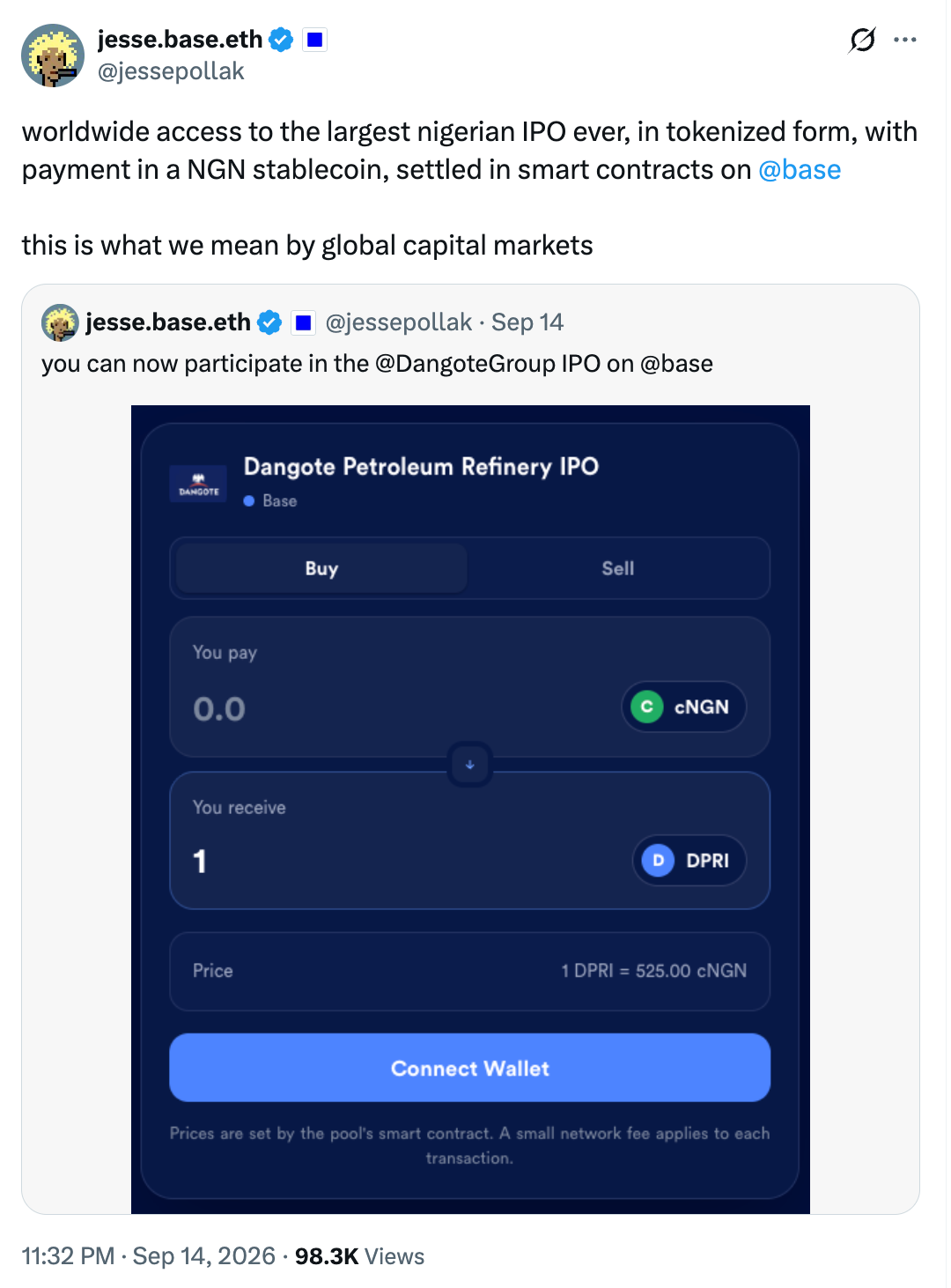
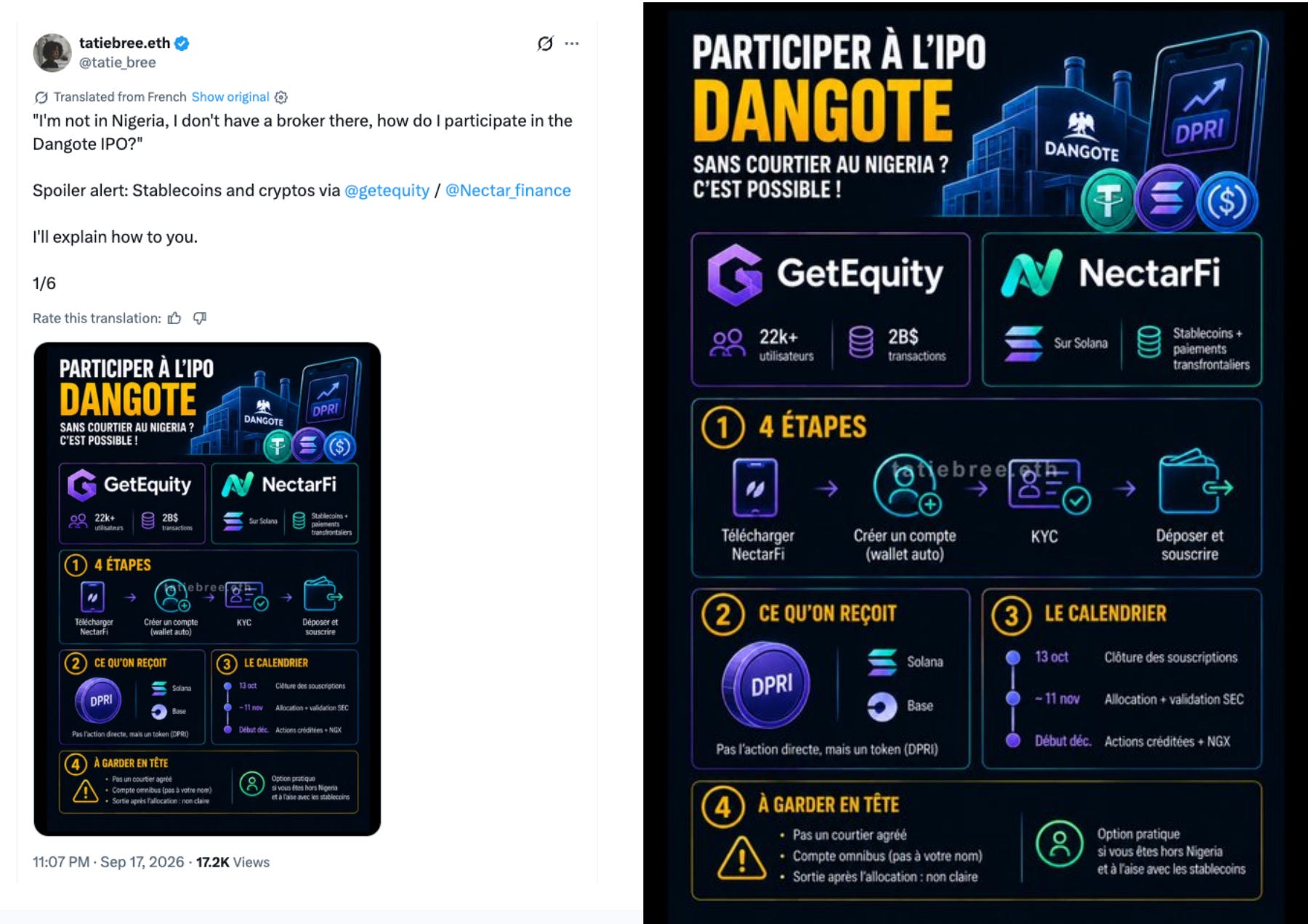
Dangote priced the offer for the refinery at ₦525 a share; GetEquity secured allocation access to the IPO, issuing the tokens on Base and Solana via NectarFi. The minimum subscription amount on NectarFi is ₦10,000, and both platforms will issue $DPRI tokens representing subscribed stakes to users at the end of the allocation period.
Quoting Afriflux on-chain data, in the first 22 hours, 103 buyers subscribed ₦9.07 million, about $6,800, and of the 69 wallets that bought through NectarFi, 53 were created less than 48 hours before their first purchase.
As at the time of writing this, buyers hold 41,500 tokens valued at ₦21.7 million of the 761,905 tokens minted.
Those numbers are tiny next to the ₦2 trillion IPO, but the wallet ages are the interesting part, because they suggest people signed up to NectarFi for this offer alone.
The same system that lets a Lagos trader buy Nvidia can also allow someone in Accra to buy Dangote. The NGX is worth about ₦158.7 trillion ($119 billion) and has traded roughly $5.3 billion of equities this year, while xStocks has traded more than $40 billion since mid-2025. Foreign investors accounted for approximately 6% of NGX transactions.
Lagos and Africa need buyers, and tokenization will put Lagos-listed shares in front of anyone holding USDC/USDT, giving the illiquid African market access to a pool of buyers the exchange never reached through stockbrokers and CSCS accounts, with Dangote’s two-day-old wallets being the first evidence of that.
My call is that tokenized NGX stocks will deepen African market liquidity once roundtripping shares into tokens and back settles in hours, in Dollars, for any holder. With price discovery and liquidity at the various exchanges being better for it.
LISTEN TO AFRICA BUILT
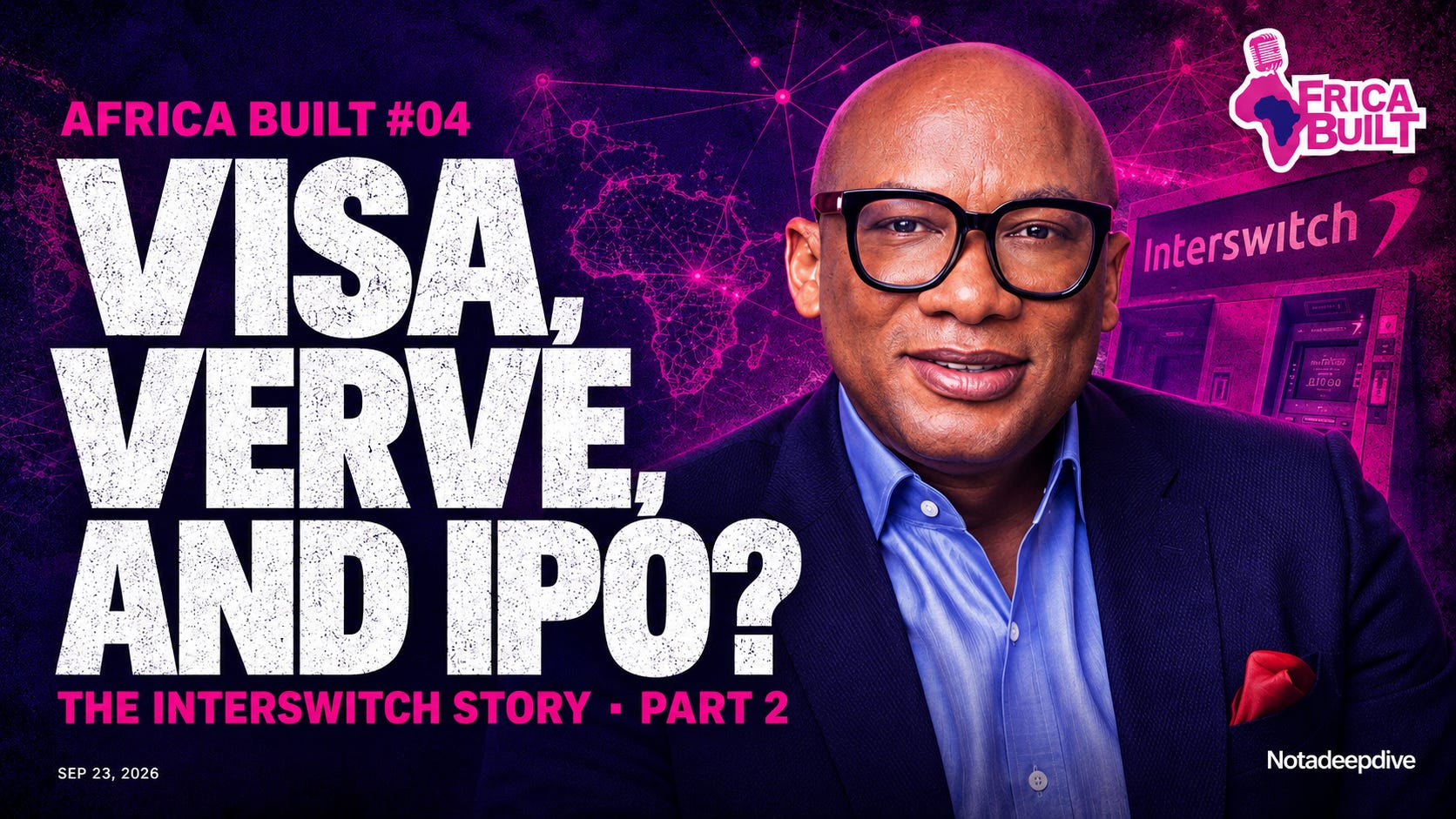
In the fourth episode of Africa Built, we conclude our two-part series on Interswitch.
Part One ended in December 2010, when Helios bought two-thirds of the company from the founding banks. This episode picks up the story from there and runs to today.
Revenue went from ₦39 billion to ₦137.5 billion in four years, while Verve, once the local alternative, became the card most Nigerian banks issue. Visa’s 2019 investment made Interswitch a unicorn. Three years later, a new round valued it at $750 million
We look at what the Naira did to that growth, how Verve won even as WebPay lost web payments to Paystack and Flutterwave, why two IPO windows closed before the company could list, and what became of the Pan-African plan in Gambia and Kenya. Then we follow the Interswitch alumni into Moniepoint and PAPSS, and ask what Interswitch has to build if the next ten years are going to look different from the last ten. Listen below and at Africabuilt.xyz
Where this is going
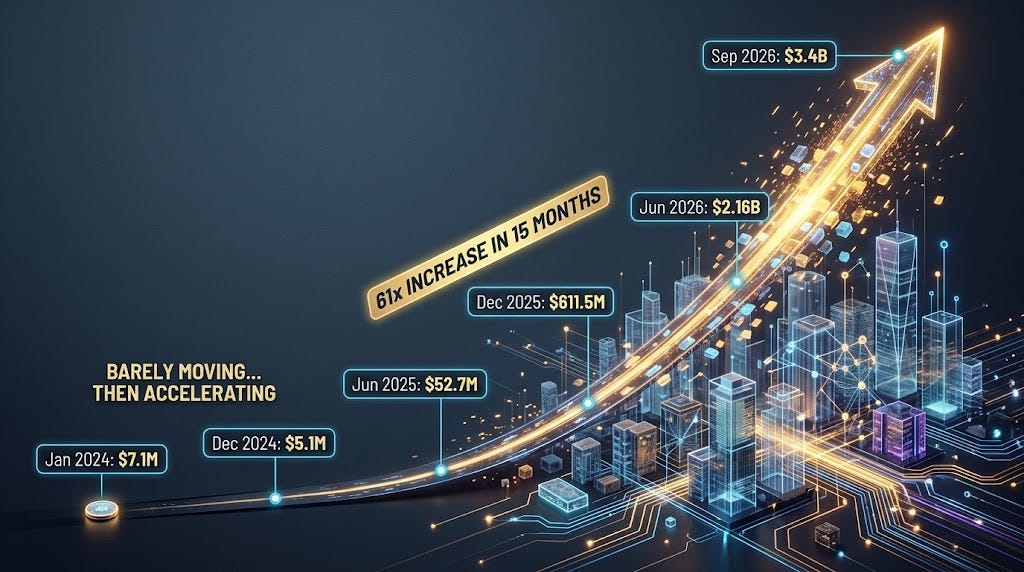
Token Terminal puts tokenised equities at $3.4 billion, up from $52.7 million in June 2025, so the market grew about 64 times in fifteen months after years of barely moving. Citi’s June report reckons tokenised public equities could draw about $2.6 trillion by 2030 if one in ten US retail investors trades onchain.
Thanks to the SEC, the rules are now catching up, as qualifying tokens must keep the rights of the underlying share, and an issuer can block third-party tokenisation of its stock by objecting within 30 days. Apple now has a say in who wraps Apple.
It’s also ironic that Coinbase and Robinhood will happily wrap Apple, Nvidia and AMC for you but neither has put its own shares on a blockchain.
Payward, Kraken’s parent, will issue the top 100 London-listed stocks as xStocks for investors in more than 110 countries, with the LSE planning to list them on its LSE 24 venue in 2027. The exchange will also explore native equity tokens with full shareholder rights on its own depository. UK and US residents are excluded from xStocks, so an investor in Lagos can hold tokenised Barclays before an investor in Manchester can.
Ownership, votes and dividends are where critics push hardest, and I think the push is overdone. Anyone who doesn’t hold a meaningful stake in a company rarely votes, and thanks to Robinhood’s multiplier system, dividends already reach token holders today in roundabout ways.
I expect tokenised stocks to inherit the full set of capabilities within two to three years. The right a retail investor will care about most is the legal claim when an issuer fails, and that is the one to watch.
The exciting outlook for tokenization is a stock that moves easily as a WhatsApp message, settles as quickly as a stablecoin, pays corporate actions automatically and works across every financial application you use.
The future of capital markets may be on the internet. Terms and conditions apply.
*The Opinions shared here are the independent analysis of the author and do not represent the views of any organisation they may be affiliated with. Nothing in this opinion piece should be regarded as Tax, Legal, Financial, or Regulatory advice.
Please do your own research and engage licensed practitioners wherever necessary.
A Few Nice Links
IPO on chain for newbies - Afriflux
Tokenization 2030 - Citi
Labourers and Wages - 1914 Reader
Hacking OpenAI - Hacktron
Forward Deployed - Arena Mag
The World Is Talking About A.I.’s Dangers. Now, It’s Time to Act - NYT
Why Agentic AI Makes Open Banking Inevitable - Fintech Takes
Okay, I might see the vision with tokenized stocks.
Of the ngx will allow a pool of shares be listed on chain as tokenized stocks to allow for non-Nigerians trade… I might just be sold.
So we can have a Kenyan buy MTNN and be accorded voting rights, ownership & dividends.