


Hello there,
The people’s IPO™️ is finally here. Africa’s largest IPO, the Dangote Refinery, will open to the public on September 14, 2026, as the company seeks to raise ₦2.1 trillion ($1.6 billion). The Offer period will last for a month, and retail access is available to a host of financial services providers. More details here.
Headlines:
⌚️Tim Cook ended his reign as Apple CEO, handing over the reins to John Ternus with over $4 trillion in additional value created during his 15-year tenure.
No deal as the proposed Stripe + Advent $53 billion purchase of PayPal is off.
🇺🇸Revolut secured conditional OCC approval for its US banking licence application.
₿ Nigeria released guidelines for taxing digital assets; more details here.
SWIFT’s new blockchain-based shared ledger settled its first transaction between BNP Paribas and HSBC.
Branded as “Uberpocalypse”, Uber announced abrupt plans to exit the Nigerian and Ugandan markets. (Analysis here)
🇬🇧Moniepoint retreats from the UK with the shutdown of its Monieworld app - More details here
🎙️Listen to the latest Africa Built Podcast on Interswitch
Most of what we read about stablecoins in Africa is typically written from New York, London, Lagos or Nairobi, and they always arrive at the same premise.
“Local currency is unreliable on the continent, people need dollars to hedge, and the blockchain is how they protect them.”
Francophone West Africa breaks that premise.
The CFA Franc is currently pegged to the Euro at 655.957, with a French Treasury convertibility guarantee behind it.
The IMF put WAEMU growth at 6.6% in 2025, among the fastest-growing regions, and with direct access to the Euro via France, nobody in Abidjan is buying USDT because they want to store value.
So what is the case for on-chain infrastructure in a place where the money already works? - (I am looking at you as well, SEPA🫵🏾)
For this one, I have gotten an entry from a subject matter expert on the topic who knows more about payments in the region than most - Neche is the country manager for Benin Republic at Payaza Africa, where she’s responsible for product delivery and Operations in the market
Enjoy.
When conversations about stablecoins in Africa come up, they usually begin with instability: inflation, currency depreciation, dollar shortages and expensive cross-border payments.
Francophone West Africa, however, presents a different opportunity as it is more homogeneous in comparison to other regions, yet they get ignored in continental discourse or lumped in with the Anglophone West African giants bordering it.
Across the eight countries of the West African Economic and Monetary Union (WAEMU/UEMOA), the CFA franc (XOF) provides a relatively predictable monetary environment. The IMF put growth in the region at 6.6% in 2025, among the fastest anywhere.
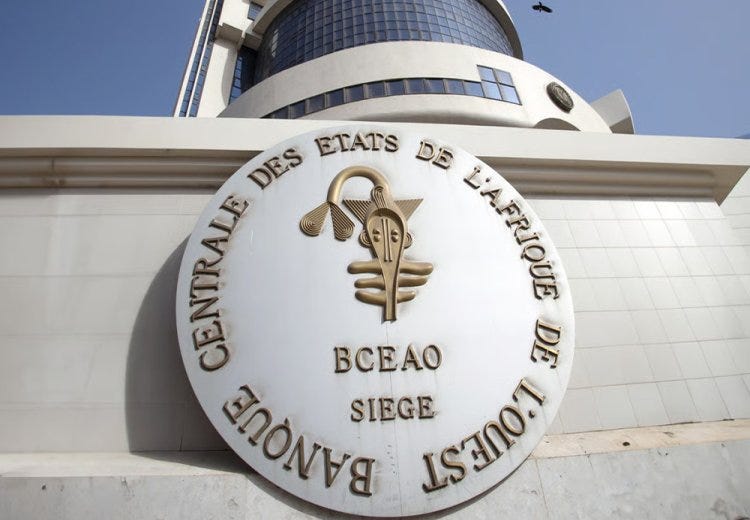
They also enjoy the benefit of being a low-inflation region, with their reported average inflation for 2025 hovering around 0.6% according to the BCEAO.
Political tensions exist, though, with Mali, Burkina Faso and Niger leaving ECOWAS in January 2025 and then proposing a joint central bank and their own currency; they still remain inside WAEMU and use the XOF, as no exit date has been set.
For fintech builders, this scenario creates an interesting question:
What if Francophone Africa does not need blockchain primarily to escape unstable money but can instead use blockchain rails to extend the advantages of monetary stability?
Stablecoin aficionados believe stablecoins will replace currencies in unstable regions in the Global South. Rather than looking to replace the CFA Franc, can better infrastructure be built around it?
Stable money doesn’t always mean efficient “money movement”
A relatively stable currency solves one problem; moving that currency efficiently solves another.
Consider a business in Benin paying a supplier in Nigeria, a Senegalese company collecting revenue from Europe, or a payment company managing liquidity across XOF, NGN, USD and EUR.
These businesses still encounter familiar problems: FX conversion, correspondent banking, prefunding, fragmented liquidity, settlement delays and reconciliation.
This area is where the next generation of financial infrastructure needs to focus.
It is important to note here that Francophone West Africa is not starting from zero.
BCEAO (Central Bank of West African States / Banque Centrale des États de l’Afrique de l’Ouest) reported 248.7 million electronic-money accounts at the end of 2024, up from 209 million a year earlier. Only 76.8 million of those were active, a rate of 30.9%.
Transaction activity reached 11 billion operations worth CFA 160.4 trillion, up 27% in volume and 20% in value.
Merchant acceptance points more than doubled over the year, from 1.75 million to 3.7 million, on the back of QR code deployment campaigns.
Tens of millions of people already understand digital balances, mobile wallets, transfers, agents and merchant payments, led by players such as Orange, Wave, MTN, Moov, Ecobank, and Yas.
So the challenge isn’t convincing everyone to download a crypto wallet.
The more interesting question is:
What infrastructure can we build underneath the financial experiences people already understand?
PI-SPI changes the blockchain conversation
In September 2025, BCEAO launched PI-SPI (Plateforme Interopérable du Système de Paiement Instantané), its interoperable instant-payment platform. Think NIBSS or PAPSS for the eight countries and financial institutions of Francophone West Africa.
PI-SPI connects banks, electronic-money institutions, microfinance institutions and payment institutions across WAEMU, allowing instant payments across participating institutions.
By April 2026, 80 institutions had connected: 59 banks, nine electronic-money institutions, 11 microfinance institutions and one payment institution, with a further 42 in live testing. By July 2026, the platform counted 30 million connected users, close to 40% of the Union’s adult population.
In its first ten months, however, PI-SPI has processed one million transactions worth CFA 110 billion. When compared to the 11 billion mobile money transactions a year processed in the region, the Central Bank admits gradual adoption for this rail is moving at a slow pace.
This is important for blockchain builders.
If BCEAO delivers rapid, interoperable XOF payments across the monetary union, and the connection deadlines say it intends to, we shouldn’t introduce blockchain simply because we can.
Use PI-SPI where it works.
As money is still largely local, the stronger opportunity for the blockchain begins where these regional rails end.
Think:
Cotonou > Lagos
Dakar > Paris
Abidjan > Dubai
Lomé > Guangzhou
Once money crosses currencies and financial systems, businesses encounter FX, liquidity, correspondent banking, prefunding and settlement problems again.
This scenario is where on-chain infrastructure becomes much more compelling.
Blockchain should disappear into the infrastructure
I believe one of the biggest mistakes in how we think about stablecoins is treating them primarily as consumer products.
A business shouldn’t need to understand USDC, blockchain networks, gas fees or wallet addresses simply to benefit from better settlement infrastructure.
Imagine a Senegalese company receiving €10,000 from a European customer.
The customer pays in Euros.
An infrastructure provider could use a Dollar stablecoin for settlement, source liquidity, convert the value into XOF, and pay the merchant’s bank or mobile-money account.
The merchant simply sees:
€10,000 received > XOF settled.
That is the opportunity.
The best on-chain infrastructure may be the kind the customer never knows is on-chain.
THE REAL ORIGIN OF INTERSWITCH
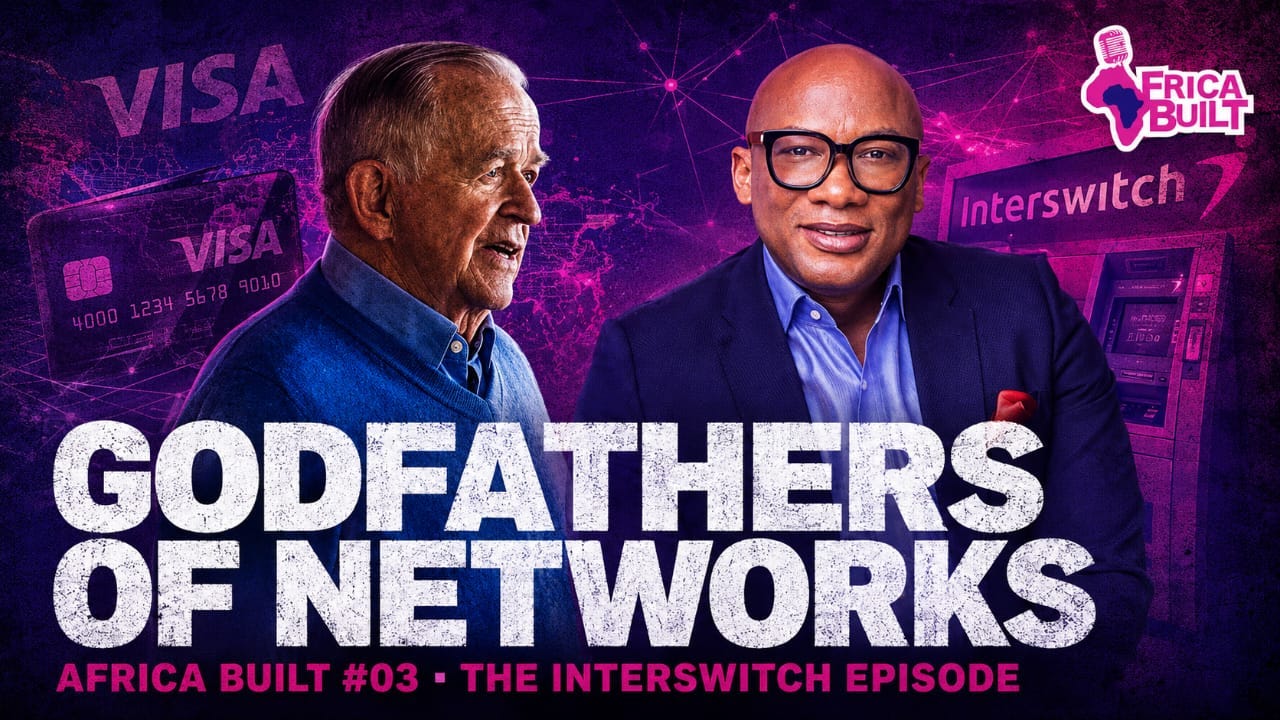
In 2002, Nigeria had roughly 90 banks. 7 of them offered ATM services. The whole country had 68 ATMs and about 1,800 POS terminals for 120 million people, and a transfer took three days to settle.
In the third episode of Africa Built, we discuss the origins of Interswitch. This episode traces the company from the engineers who built Nigeria’s first bank networks in the 1980s to the December 2010 exit of the founding consortium.
So, what should fintech builders actually build in Francophone Africa?
Cross-border B2B payments:
A Beninese merchant trading with Nigeria should be able to know exactly how much XOF a transaction will cost transparently, while the infrastructure handles NGN liquidity, FX, compliance and settlement behind the scenes.
Treasury and liquidity infrastructure:
Fintechs operating across multiple African markets often maintain multiple currencies, bank accounts and prefunded positions. Programmable 24/7 settlement could help companies rebalance liquidity faster and reduce idle capital.
International merchant collections:
A business in Abidjan should be able to charge a customer in EUR, USD or GBP and settle conveniently into XOF. Blockchain can become one of the settlement layers connecting those systems.
Remittance infrastructure:
Instead of asking consumers to use crypto wallets, stablecoins could operate underneath existing remittance products, improving settlement, liquidity and corridor availability while customers continue sending and receiving familiar currencies.
In all four cases, stablecoins are not the product. Better settlement is the product.
Confronting the Sovereignty Question
There is a strategic problem if every African on-chain payment ultimately becomes:
XOF/local currency > USD stablecoin > destination currency.
USD stablecoins are attractive because they provide deep liquidity and global interoperability; however, widespread dependence on them can also introduce concerns around dollarisation, monetary sovereignty and foreign infrastructure dependence.
For builders, that means the long-term question cannot only be:
“Which USD stablecoin should we integrate?”
We should also ask:
“What should regulated XOF-denominated on-chain money eventually look like?”
It could take the form of tokenised bank deposits, regulated electronic money, wholesale settlement instruments or another BCEAO-approved model.
Whatever form it takes, regulation cannot be an afterthought.
For financial infrastructure, KYC, AML/CFT, custody, transaction monitoring, consumer protection, FX controls and settlement finality aren’t made-up terms that legal and compliance teams add after the product has been built. They are part of the product architecture.
Rails, not hype
Francophone West Africa already has several ingredients many emerging markets are still trying to establish: a common monetary area, relatively predictable money, widespread mobile-money adoption and increasingly interoperable regional payments.
Blockchain does not need to replace these systems. It should extend them where they stop being efficient.
The question for founders, product leaders, regulators and investors should therefore not be:
“How do we put Francophone Africa on-chain?”
It should be:
“Where does today’s financial infrastructure stop serving businesses efficiently, and can on-chain rails meaningfully extend it?”
Sometimes the answer will be no.
An XOF-to-XOF payment may already work better through PI-SPI, the same way a mobile-money transfer may already provide the right customer experience.
When businesses face issues like fragmented currencies, trapped liquidity, international collection problems, slow settlement, or cross-border payment friction, they find blockchain-based solutions to be more compelling.
And perhaps that is what the next phase of blockchain adoption in Francophone Africa should look like.
A customer pays through mobile money.
A merchant receives CFA francs.
A supplier receives naira.
The regulator sees a compliant financial institution.
And somewhere underneath it all, value moves through programmable, 24/7 on-chain infrastructure.
The customer may never even know.
That is when blockchain stops being the product and starts becoming infrastructure.
-End.-