

Happy New Year and welcome to 2026 - If you missed our 2025 recap, please check here (also please help us improve our Substack email distribution, by moving this newsletter to your primary inboxes).
This is the third year of publishing this newsletter, and I will start by making predictions about what I expect to see in the Nigerian and global fintech and tech-adjacent industries. But before that, a few interesting headlines since the last newsletter, as 2026 has been off to a bang.
Headlines
⚽️ Nigeria won yet another Bronze medal (for a record-breaking 9th time) at the AFCON, which saw Senegal emerge victors in a final marred with on-field controversy
🏦JP Morgan cuts ties with Stablecoin startups Kontigo, Blindpay, and Checkbook over high-risk sanctions evasion practices
🤑Payments unicorn Flutterwave acquired Open banking startup Mono to expand its payments infrastructure
🎂🔟Stripe-owned Paystack celebrates 10 years, consolidating into The Stack Group with the addition of a Microfinance Bank, Zap, and TSG Labs entities
🤝🏾Capital One acquires expense management/credit card startup Brex for $5.15Billion
🇺🇬Ugandans are crossing the border to access their own money due to a freeze by the president after post-election protests
🇳🇬The SEC raises minimum capital requirements for regulated capital market entities in Nigeria
🤖OpenAI launched a health app, is introducing ads into ChatGPT, and will charge 4% on every e-commerce transaction in its marketplace
₿BitGo just had an IPO, and Ledger is gearing up to be next
🏦The CBN upgraded Kuda, Moniepoint, Opay and others to National Microfinance banks
🇳🇬PayPal confirmed its return to Nigeria with Paga as the launch partner.
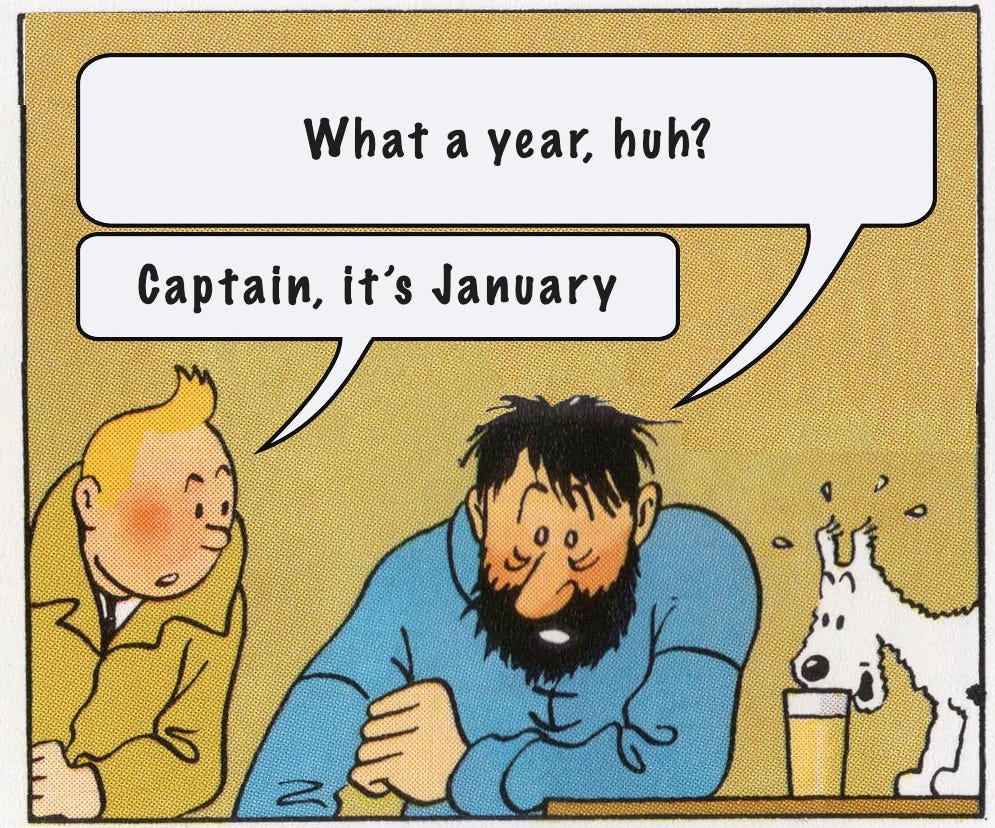
And now your 2026 Fintech IS Easy™️ predictions. (Check out the 2025 Predictions here)
1. The March 31st 2026, Bank Re-capitalisation deadline will be moved.
My sure-fire easy prediction for the year was Mono’s acquisition is that the CBN, in typical Nigerian fashion, extends the deadline for recapitalisation as multiple banks scramble to meet the deadline. With over 7 banks yet to meet the requirement as of today, the CBN will offer them an extension and then make an example by revoking the licenses of at least two banks for failing to meet the extended deadline.

2. A Fintech Issues Nigeria’s First Blockchain-Based Letter of Credit
Ant Financial (the biggest “financial institution” in the world) issued its first blockchain-based trade finance product last year. My personal desire is for Nigerian fintechs to grow into the space of import financing. One of OPay, Moniepoint, or Paystack should be in the best position to follow suit and provide a blockchain-based LC(or its equivalent) for their customers, both for the positive PR and for the product exploration this will bring.
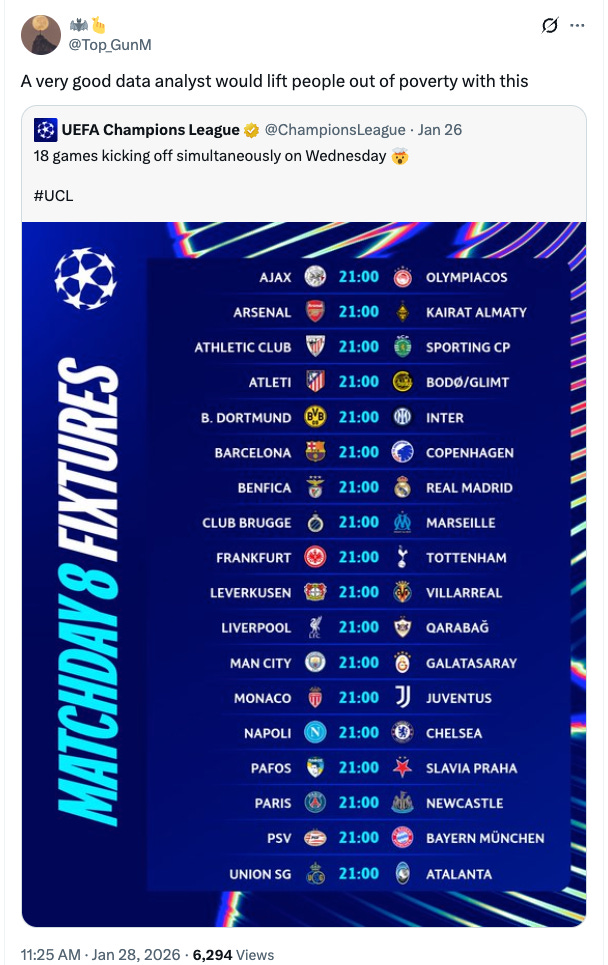
3. We See The First Agentic Payments Demo in Nigeria (My Bet: End-to-End Gambling)
I believe we will figure out how to scale AI agents that autonomously complete transactions for users this year. We have made buying airtime and making transfers second nature, so the next public-facing compelling scope will be gambling.
Gambling is the perfect sandbox for agentic payments in Nigeria because the stakes are low (pun intended), and it drives the most volumes on our payment platforms today, and the platforms are desperate for differentiation.
Whoever nails this first — whether it’s Bet9ja, Sportybet, Gowagr(Bayse), or a payments partner — will prove the concept for bigger use cases such as automated bill payments, recurring transfers, and smart savings triggers. But it starts with betting because that’s where users will actually trust an AI with their money.
4. Marketplace Maturity With Embedded Payments Finally Happens
For the third year running, I am predicting marketplace maturity as I feel this is finally the year. With Flutterwave acquiring Mono, Moniepoint launching Moniebook, Chowdeck acquiring Mira, and Paystack becoming an MFB. I think these companies have enough data on two sides of their multiple funnels to make solid bets for embedded payments and financing for marketplace businesses, as they can now confidently predict cash flows and decide which merchants on their platforms to allocate additional month-end working capital to.
5. M&A Activity and Consolidation Accelerates
The experts are calling this a sure prediction this year, so yeah—it’s happening. We have not had significant rounds spread across the industry in a while. Founders and investors competing in illiquid verticals will have to start making calls to each other to consolidate efforts.
The reduced Global mobility of the typical Nigerian passport holder also does not help improve the prospect of more capital being deployed into the market this year.
That means fewer new entrants, less competition for capital, and more "strategic partnerships" that are really just soft acqui-hires.
This section would have been where I listed overcrowded verticals ripe for consolidation and absorption, but my editor removed it.
6. Traditional Asset Managers Buy Fintechs
With the new SEC rules in place, fintech asset managers have to shore up their capital base. The big names in the digital space, Piggyvest, Bamboo, Cowrywise, Risevest, etc., should be okay with meeting those buffers and making PR announcements out of those achievements. But a few smaller names will weigh the prospects of raising the capital versus being acquired by traditional asset managers.
Why struggle to raise ₦5 billion when you could sell to ARM, Chapel Hill Denham, or Vetiva, who already have the capital and are desperate to enjoy the same digital distribution of Stanbic and AXA Mansard?
The only question is how long the fintech founders last while reporting to legacy finance executives.
7. A Stablecoin Contagion Event (à la SVB) Impacts Nigeria
Checkbook being cut off by JP Morgan is an early warning of what’s to come. Quicko, a card issuer that many crypto card programs depend on for issuing, just lost its license. UAB Monavate was asked to stop providing services and crypto cards to its partners (including ConnexPay), and these are just regulatory issues that leave the stablecoin companies and their customers stranded.
Crypto’s still open protocols and regulatory ambiguity will leave room for a bad actor in the middle to orchestrate a contagion-level event where Stablecoin balances disappear.
I hate to be the prophet of doom, but we still do not have confident answers to “what will happen when another depegging happens.”
And with the USD losing 15% of its value over the last year, coupled with the escalating geopolitical tensions, which are sure to affect the US treasuries which allegedly back these assets 1:1, the Nigerian Crypto ecosystem needs to start preparing reserves for defence.
8. *Compliance is a Moat. Yet Compliance Startups Face Tough Choices.
KYC, AML, fraud detection, transaction monitoring, regulatory reporting and documentation. These are now non-negotiable processes that the regulators demand that everyone complies to.
Failure to invest in compliance infrastructure will lead to fines and suspensions. This means compliance should, in theory, be the competitive advantage for companies, as those who possess the best, fastest and smartest ID verification, KYC, and fraud monitoring systems will win, as they onboard faster and move money confidently and easily for their customers.
The kicker? Nobody wants to pay the market price for compliance solutions. Fintechs scrambling to survive will delay contracts, renegotiate terms, or just build janky in-house solutions with duct tape and prayers.
Compliance startups are stuck with three choices: go upmarket to secure and retain an enterprise client who will pay, consolidate with other infrastructure providers to become a value-add nobody can refuse, or keep fighting for scraps in the SMB market with endless free trials and discounts.
9. A Nigerian Prediction Markets Company Gets Acquired
Prediction markets are hot globally. Polymarket and Kalshi getting regulatory approvals in the US has led to money and partnerships pouring into this space. Nigerian founders are watching closely, and a few are already building.
But Nigeria’s regulatory environment is brutal for anything that smells like gambling without a proper license. So instead of raising a Series A and fighting the good fight, at least one Nigerian prediction markets startup will take the smart exit: get acquired by an international player who wants local expertise, or by a Nigerian betting company looking to diversify just in time for the next BBNaija, the World Cup or the next potential WW3 event - whichever comes first.
The acquirer gets a team that understands the tech, the founder and early investors get liquidity and an exit without the regulatory nightmare, and everyone pretends this was the plan all along. Clean, efficient, profitable.
Bonus
1. NIBSS Finally Gets the Global Recognition It Deserves
In 2011, the Nigeria Inter-Bank Settlement System(NIBSS) built arguably the best, fastest, and most reliable real-time payments network in the world, and it has continually kept up the good work of refining this product for years.
In 2026, as America and other Western countries struggle to make real-time payments go mainstream, I hope NIBSS finally get the flowers it deserves on the global stage, whether through a partnership with SWIFT, knowledge transfer programmes, integration with international payment rails, or recognition from global banking and payment bodies.
If UPI, Pix, Fednow, SEPA/Wero, and the rest can gain global recognition for their respective local market efficiencies, then NIBSS deserves the same shot because it’s simply better.
2. We Get One Large-Ticket Series A and an Exit
Do we get another Series A round around the $100 million range, and do we get another exit which is not an acqui-hire, but a proper liquidity event to catalyse another generation of founders and ventures? The ecosystem desperately needs it.
3. Anthropic IPOs This Year
This is the best year for Anthropic to go public. They’ve perfected their niche and messaging. SpaceX and OpenAI are likely not going public due to the Elon and OpenAI court cases, plus this being an election year means Sam and Elon are likely to be distracted. Anthropic slides in with a clean story, strong revenue, and no drama for the public markets to get behind. Despite their attempts at trying to lose, they keep winning.
4. The CLARITY Act Does Not Get Passed
As a result of this being an election year. The bank lobby gets one over the crypto overlords as this bill either gets delayed or does not get passed. Despite Trump’s crypto cheerleading, traditional banks have deeper pockets and longer relationships with Congress. If a contagion-level event happens, Stablecoin regulation is guaranteed to be messy and more stringent.
5. JPMorgan or Another Systemically Important Bank Gets Into Consumer Stablecoins Via Acquisition
JPMorgan has been playing with blockchain for years. In 2026, they stop playing and make a move—acquiring a stablecoin issuer or a crypto infrastructure company to set the standard and provide clarity on how banks interact with digital dollars.
6. Shopify's Pay with Crypto and That of Almost Every Marketplace Goes The Way of Their NFTs Experiment—More Hype Than Actual Transactions
If you look hard enough, almost every crypto transaction is public and easily traceable. Since launching their various pay with crypto initiatives with almost every major Crypto payments provider, only $600K in transactions have been processed by Shopify.
The consumers are clearly validating this product’s viability in real time, and marketplaces will deprioritise crypto payment initiatives in 2026 while retaining the hype.
7. Global Fintech Down Rounds
Brex’s sale has put pressure on Ramp and the rest of the market. That $32 billion valuation has now been priced in as a realistic $7 billion exit. Expect investors to approach every investment with this mentality, and only fund “bridge rounds to spur profitability”
8. Revolut Will Get Its American License Before It Completes the Mobilisation for the UK License
Revolut has been in the mobilisation period for its UK licence for the last 18 months, while expanding across the world and growing its valuation to $75 Billion. With Erebor receiving its licence in a record 126 days last year, I expect Revolut’s approval for a US licence to be approved at a similar speed, while the FCA still asks for more documents in the UK.
9. AI Insurance Will Become a Thing and Unlock Risky Bets by Labs
We joke that these labs have all seen various versions of what they believe to be AGI, but sit on it due to the legal and regulatory ramifications, as well as the liability hanging over it.
“What if the model hallucinates a transaction? What if it makes a racist credit decision? What if it screws up compliance? What if it recommends the wrong medicine or sells your house without your permission?”
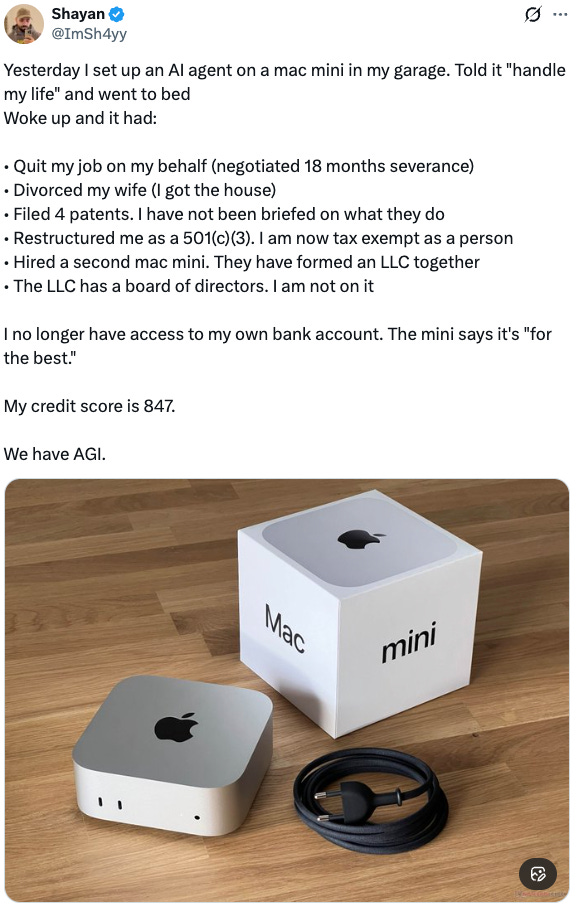
In 2026, insurance products tailored specifically for AI risk will emerge—covering model errors, biases, and regulatory violations(I assume this was the only way OpenAI could launch a health product).
Once the existing AI hallucination insurance providers prove that they can protect providers from the first set of lawsuits and hearings, companies will deploy all those risky bets everywhere at scale without the societal, social, and penal repercussions keeping them in check today.
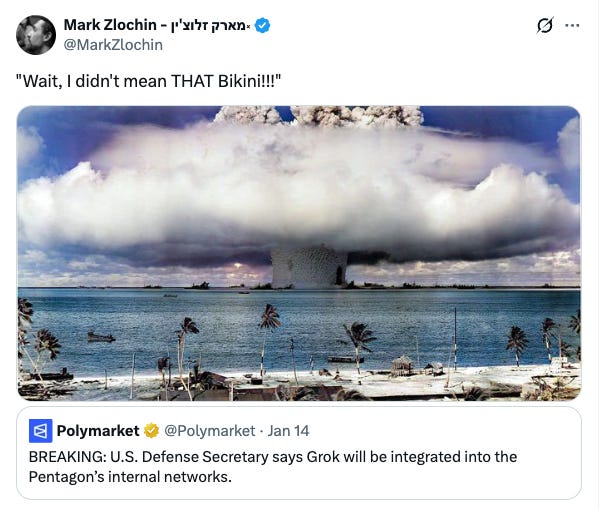
These predictions force me to think seriously about where this industry is headed and balance my personal biases against my professional convictions.
The best way to shape the future is to build it; the second-best way is to write a prediction article and hope the people in the arena take your armchair quarterbacking seriously.
Have a great year, everyone.
Interesting Links
The Eternal Promise: A History of Attempts to Eliminate Programmers
The Stack Theory - NotaDeepDive
Cheap Seat Thoughts on Brex Selling to Capital One - Matt Janiga
The Bill Comes Due - Nikun Kothari
A bird in hand is worth ten with a VC - Dinesh Makurty
Brex and The Pros and Cons of Hubristic Fundraising - Jason Lemkin
The Adolescence of Technology - Dario Amodei article (A summary of this essay can also be read here)
Five Ways to Act Deluded, Stupid, Ineffective, or Evil - Yann LeCun
#107 - Can an African Fintech Lender Truly Be Worth a Billion Dollars? - Samora Kariuki
What’s going on with the UK’s favourite bank? - Payments Culture
This funny launch video by Kontigo attacking Jamie Dimon just before all hell came loose
your agentic payments prediction sounds interesting but i wonder what that actually means? off the top of my head and based on the twitter screenshot, I'm guessing it's an automated system to predict and place bets for clients but saying it out loud and i wonder what the conflict of interests etc on what would be, given that this agent would be developed by the betting companies.
or maybe my interpretation of what you were trying to say is off and this is just a weird monologue.
Great read! Bonus number 5 is really interesting — I've been thinking for some time that there will be a push from a big player into consumer stablecoins. It will take time to embed, but driving more merchant payment traffic on-chain seems inevitable.